Rotorua Tours and Excursions
Every kind of Rotorua tour, ranked by what the region does best. Geothermal parks, day trips to Hobbiton and Waitomo, Kaituna rafting, and how to plan without a car.
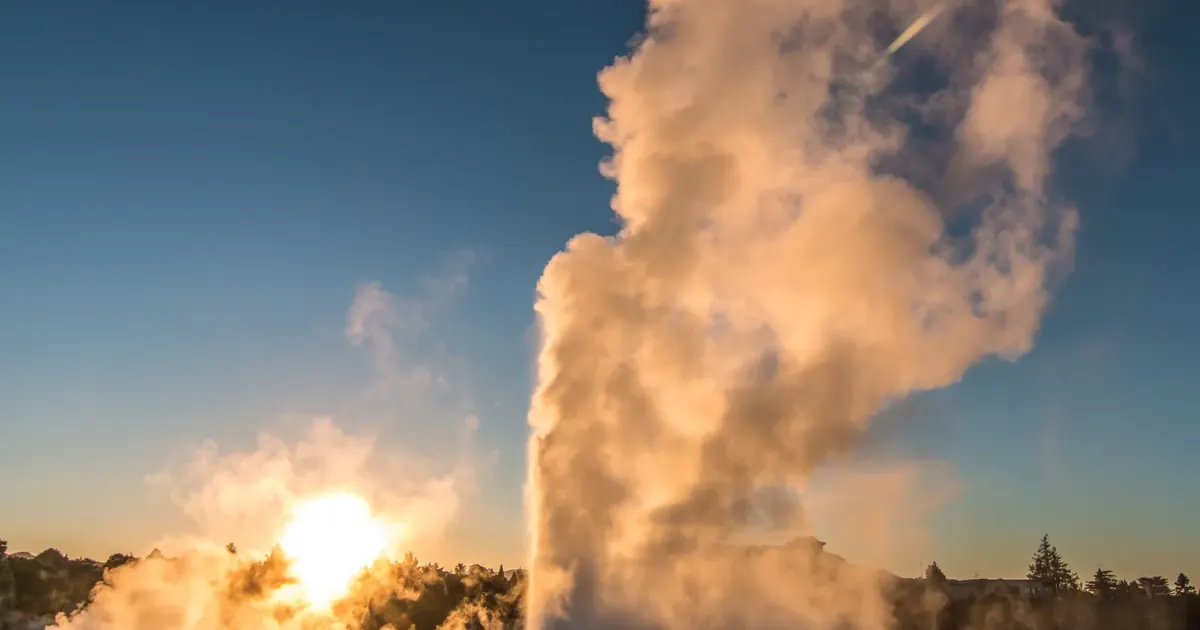
Rotorua sells more tours than almost anywhere else in New Zealand, and the sheer volume is the problem. GetYourGuide alone lists over two hundred products for the town. Most visitors have two or three days and no way of telling which of those are the reason people come here and which are filler.
This guide sorts them. Rotorua’s genuine specialities are geothermal landscapes, Māori culture and adventure — in that order historically, though most people book them in reverse. Everything else is a good afternoon rather than a reason to visit.
Check Availability
What kinds of tours run in Rotorua?
| Category | Typical duration | Pickup? | Best for |
|---|---|---|---|
| Geothermal parks | Half day (~4 hrs) to full day | Shuttles from i-SITE | First-time visitors; the region’s headline attraction |
| Day trips from Rotorua | 6–12 hrs | Usually hotel or i-SITE pickup | Hobbiton, Waitomo, Taupō |
| Māori cultural evenings | 3–3.5 hrs | Usually included | Hāngī, performance, storytelling |
| Adventure | 2.5 hrs to full day | Mostly meet on site | Rafting, luge, ziplines |
| Hot springs and spa | 1–3 hrs | Meet on site | Recovery day; winter |
| Lakes, forest and family | 1–3 hrs | Meet on site | Redwoods, cruises, Agrodome |
A useful rule: day trips and evening cultural experiences almost always include transport; fixed-site attractions almost never do. That single distinction shapes whether you need a car.
Geothermal tours: the reason Rotorua exists
The town sits on an active volcanic field, and the geothermal parks are what the region is genuinely world-class at. Four are worth your time, and they are different enough that choosing between them matters.
Wai-O-Tapu Thermal Wonderland is the most colourful — Champagne Pool, Artist’s Palette, the fluorescent Devil’s Bath — and the most photographed. It is around 27–31 km south of town on SH5, which means transport is the main planning question. The half-day tour from Rotorua runs about four hours from the i-SITE, from $101 with entry included; the Wai-O-Tapu and Waimangu eco-thermal morning tour pairs it with Waimangu over about five hours, from $104, and is the one option that puts a guide on the loops with you. With a car, the park’s own entry ticket is from $27.
Te Puia is the closest to town, at roughly 3.5 km, and has the naturally erupting Pōhutu Geyser plus the New Zealand Māori Arts and Crafts Institute, where carving and weaving are taught. It is the easiest to add to a half-empty afternoon.
Waimangu Volcanic Valley, about 19 km south, is the world’s youngest geothermal system, created by the 1886 Tarawera eruption. It is the quietest of the four and the best walk, with an optional Lake Rotomahana cruise.
Hell’s Gate at Tikitere is the most active reserve and the only place in New Zealand offering a geothermal mud bath alongside the park walk.
We compare these properly in the Wai-O-Tapu vs Te Puia vs Waimangu guide — the short version is that Wai-O-Tapu wins on colour, Te Puia on geysers and convenience, Waimangu on peace.
Full-day tours combining two or three parks exist and run around eight hours. They are good value if you have one day only; they are also a lot of steam and sulphur in a single sitting. The Wai-O-Tapu, Waimangu and Te Puia full-day tour is the pick of them — from $190, capped at fifteen guests, all three admissions inside the fare, and the only way to see an induced geyser and a natural one on the same day. It rates 4.8 across 213 reviews. Our breakdown →
Day trips from Rotorua
This is where Rotorua earns its keep as a base. Three destinations are genuinely worth the drive, and all three are sold as guided tours departing from Rotorua — not just self-drive routes.
Hobbiton Movie Set
About an hour’s drive to Matamata, across the Kaimai Ranges. Tours from Rotorua typically check in at the i-SITE around 8am, reach the set mid-morning for the guided walk through the Shire, include a buffet lunch in the Party Marquee, and have you back in town by early afternoon. Round trip is roughly six and a half hours.
Worth knowing: you cannot visit Hobbiton independently. Access is by guided tour only, so the “tour” is not an upsell — it is the only way in.
If you are coming from Auckland rather than basing yourself in Rotorua, the Hobbiton and Wai-O-Tapu combination is covered in our Rotorua day trip from Auckland guide.
Waitomo Glowworm Caves
Just under two hours each way, which makes this a full day. The standard experience is a guided cave tour of around 45 minutes ending with a silent boat ride beneath the glowworm grotto. Adventure operators also run black-water rafting — floating through Ruakuri Cave on an inner tube — for those who would rather not walk.
Combined Hobbiton and Waitomo full-day tours run from Rotorua, usually with a pickup outside the i-SITE around 6:45am. Some operators sell this one-way, finishing in Auckland, which is a neat trick if you are heading north anyway.
Taupō and Huka Falls
Around 80 km south on SH5, an hour to seventy-five minutes’ drive. Huka Falls is the draw and the geology is the story: the Waikato River narrows from roughly 100 metres wide into a canyon about 15 metres across, forcing something close to 220 cubic metres of water per second through the gap. The final drop is six metres, though the depth of the water below makes the effective fall closer to eleven.
Day trips typically add Craters of the Moon, the Aratiatia Rapids releases, or a Lake Taupō cruise to the Mine Bay Māori rock carvings. Some substitute a geothermal stop on the way, which is where Wai-O-Tapu often gets folded in — the Taupō day trip from Rotorua lets you choose Orakei Korako or Wai-O-Tapu as that stop, from $148. It rates 4.8 across 62 reviews, and its listing names the Orakei Korako admission but not Wai-O-Tapu’s, so check before choosing that option.
What does not work as a day trip
Whakaari / White Island. There are no on-land tours. Landings have not operated since the eruption of 9 December 2019, in which 22 people died and 25 were injured; legal and coronial proceedings have continued since. The volcano can still be seen on scenic flights from Whakatāne and Rotorua, and from lookout points along the Bay of Plenty coast. Treat any listing offering a landing with suspicion.
The Tongariro Alpine Crossing. It is a six-to-eight-hour, roughly 20 km alpine walk, and the shuttle network is built around National Park Village, Taupō and Turangi — not Rotorua. Doing it from here means a pre-dawn departure and a very long day. Base yourself closer.
Tauranga and Mount Maunganui are only 45 to 60 minutes away, but the commercial traffic runs the other direction: cruise passengers day-tripping into Rotorua. Drive it yourself or take the scheduled coach.
Adventure tours
Rotorua is the quieter half of New Zealand’s adventure scene, and a few of these are genuinely world-firsts rather than marketing.
Kaituna River rafting at Okere Falls, about twenty minutes from town, is the standout. Grade 5, roughly 50 minutes on the water, fourteen rapids, and a seven-metre drop over Tutea Falls — described consistently by operators as the highest commercially rafted waterfall in the world. Minimum age is 13 for the full run.
Skyline Rotorua runs a 900-metre gondola up Mt Ngongotaha to a luge that has been going since 1985, with five tracks totalling 7.3 km. There are also ziplines, a skyswing and a restaurant at the top. Open daily from 9am, year-round. It is the most reliable family half-day in Rotorua.
ZORB — rolling downhill inside an inflatable sphere — was invented here and Rotorua remains the only place in New Zealand you can do it.
Velocity Valley bundles five separate rides: a jet-sprint boat, a 40-metre swing, a human-powered monorail, a wind tunnel and a 43-metre freefall into a net. Mix and match by ride or buy a package.
Rotorua Canopy Tours runs ziplines and suspended walkways through native forest on roughly three-hour tours, in one of the few remaining tracts of unlogged bush near the city.
Hot springs and spa
Worth a slot in any itinerary, and particularly good after a day of walking geothermal parks.
Polynesian Spa is the classic — 28 hot pools stepped down to the edge of Lake Rotorua, plus mud and massage treatments. Wai Ariki Hot Springs and Spa is the newer and more ceremonial option, a kaupapa-Māori wellness complex developed by Ngāti Whakaue around a two-hour, seven-step “Restorative Journey”. Hell’s Gate offers the mud bath. Secret Spot puts private wood-fired tubs beside the Redwoods, and Waikite Valley Thermal Pools, about half an hour south, is the locals’ choice and the least polished in a good way.
Māori cultural experiences
Rotorua is the centre of Māori tourism in New Zealand and the evening cultural experiences — pōwhiri, kapa haka performance, hāngī dinner — are for many visitors the most memorable part of the trip. Four main operators:
- Te Pā Tū (formerly Tamaki Māori Village), on SH5 south of the city, with bus pickup from town and a return around 9:30pm
- Mitai Māori Village on Fairy Springs Road, which adds a waka on a sacred spring and a glowworm walk
- Te Puia, which runs its Te Pō evening experience alongside its daytime geothermal and arts programme
- Whakarewarewa, the Living Māori Village, where Tūhourangi Ngāti Wāhiao families still live among the geothermal features and have hosted visitors for over two hundred years
Choosing between them is a bigger question than this page can settle, and it depends mainly on whether you want intimacy, scale, or a cultural experience attached to a geothermal park. Our sister guide to Rotorua hāngī and Māori cultural experiences goes through it properly.
Forest, lake and family
Redwoods Treewalk is 700 metres of suspended walkway strung across 28 bridges and 27 platforms, nine to twenty metres above the forest floor, taking about forty minutes. The Nightlights version, lit by 34 lanterns designed by David Trubridge, is the better one. There is also a short guided glowworm experience and a high-ropes course on site. Book Nightlights for a specific time slot.
Whakarewarewa Forest mountain biking is free and enormous — RotoruaNZ cites more than 180 km of trails, and Rotorua holds gold-level Ride Centre status from IMBA, one of only a handful worldwide. Bike hire and a café are at the Waipa car park.
Agrodome, ten minutes north, runs a farm show with nineteen sheep breeds, live shearing and sheepdogs, plus a tractor tour of the working farm. Allow two and a half hours. It also now houses the National Kiwi Hatchery.
Paradise Valley Springs is a wildlife park with a lion pride, west of town. Note that Rainbow Springs closed permanently in 2022 after ninety years — it still appears on older itineraries and blog posts, so ignore those.
On the water, Rotorua Duck Tours runs an amphibious vehicle from the streets straight into the lake, and boat operators run trips to Mokoia Island, the sacred, predator-free island in the middle of Lake Rotorua and the setting of the Hinemoa and Tūtānekai story.
Are multi-attraction passes worth it?
Rotorua has bundled attraction passes — usually sold as a “Super Pass” or multi-choice pass — combining a selection from Skyline, Polynesian Spa, Velocity Valley or ZORB, Paradise Valley Springs and Te Puia’s evening experience.
They are typically open-dated, valid for around twelve months, and need no advance booking, which suits flexible travellers. Two caveats: they exclude transport, and they rarely include the outlying geothermal parks, which is where car-free visitors need the most help. Do the arithmetic on the specific attractions you would actually visit rather than assuming the bundle wins.
Pass contents and pricing change; check what is currently included before buying.
Do you need a car in Rotorua?
Not for the town, yes for the region.
Central Rotorua is compact and walkable — the lakefront, Eat Street, Government Gardens and Kuirau Park are all within a short stroll, and a local CityRide bus network using the Bee Card covers the urban area including the airport route. Te Puia, Skyline, the Redwoods and Polynesian Spa are all reachable without a car.
The outlying geothermal parks are the problem. Wai-O-Tapu, Waimangu and Hell’s Gate all sit well outside town with no public bus. The Rotorua i-SITE at 1167 Fenton Street is the practical solution: it is open almost every day of the year, offers a free booking service, and is the departure point for shuttles to Wai-O-Tapu and Waimangu as well as most coach day tours. If you are car-free, plan your outlying visits around it.
Full detail on the Wai-O-Tapu shuttle specifically is in our Rotorua day trip from Auckland guide, and every transport-inclusive option is compared in our which Wai-O-Tapu ticket guide.
How many days do you need in Rotorua?
Two to three is the consensus, and it holds up.
- One day: one geothermal park plus either Skyline or an evening cultural experience. Rushed, but functional.
- Two days: geothermal park and Skyline on day one; rafting or the Redwoods plus a Māori cultural evening on day two.
- Three days: add a day trip — Hobbiton, Waitomo or Taupō — or a second geothermal park.
Anything beyond three days is for mountain bikers, who will happily spend a week in the forest.
When to visit, and when to avoid the crowds
January and February are the warmest and the busiest. March and April are the sweet spot — still warm, thinning crowds, autumn colour in the Redwoods. Winter is cooler and wetter but excellent for hot pools, and the geothermal parks are more dramatic when steam hangs in cold air.
Two crowding factors to plan around:
New Zealand school holidays. In 2026 the main breaks fall in early-to-mid April, from early to mid July, late September into early October, and from mid-December.
Cruise ship days. Ships dock at Port of Tauranga, an hour or so away, roughly from October through April, and passengers shuttle into Rotorua in large numbers. The 2024–25 season had about ninety ship visits, and 79 are scheduled for 2026–27, most of them from January to March. If your dates are flexible, the port’s published schedule shows which days a ship is in.
For Wai-O-Tapu specifically, the opening hours, the geyser timing and the seasons are in our opening hours and best time to visit guide.
Frequently asked questions
What is Rotorua best known for?
Geothermal activity — geysers, hot springs, mud pools and coloured thermal lakes — and as the centre of Māori cultural tourism in New Zealand. Adventure activities are a strong third.
Which Rotorua tour should I book if I only have one day?
A geothermal park in the morning and a Māori cultural evening. That covers both things Rotorua is genuinely known for. If you want a single tour that does it all, full-day multi-park options run around eight hours.
Can you do Hobbiton as a day trip from Rotorua?
Yes. Hobbiton is around an hour away near Matamata, and guided day tours depart Rotorua daily with a round trip of roughly six and a half hours including the set tour and lunch. Independent visits are not possible — access is by guided tour only.
How far is Waitomo from Rotorua?
Just under two hours each way, which makes it a full-day trip. Combined Hobbiton and Waitomo tours run from Rotorua, typically departing around 6:45am.
Are there tours to White Island from Rotorua?
Not on-land ones. Landings on Whakaari / White Island have not operated since the December 2019 eruption. Scenic flights over the volcano still run.
Do Rotorua tours include hotel pickup?
Day trips and evening cultural experiences usually do. Fixed-site attractions such as Skyline, the Redwoods, Agrodome and Polynesian Spa generally expect you to make your own way there.
Can you visit Rotorua without a car?
Yes for the town, which is walkable and has a local bus network. For Wai-O-Tapu, Waimangu and Hell’s Gate you will need a shuttle or a guided tour, most of which leave from the i-SITE on Fenton Street.
Is the Rotorua Super Pass worth buying?
It depends entirely on which attractions you would visit anyway. The passes are open-dated and valid for around a year, but they exclude transport and generally do not cover the outlying geothermal parks. Price up your actual shortlist first.
Ready to book? Compare every Wai-O-Tapu ticket and tour →
Related reading:
See the Champagne Pool for Yourself
Full-day park admission, the Lady Knox Geyser presentation at 10:15am, and three walking loops through the most colourful geothermal ground in New Zealand. Free cancellation up to 24 hours before.
Check Availability & Book