The park behind the postcard
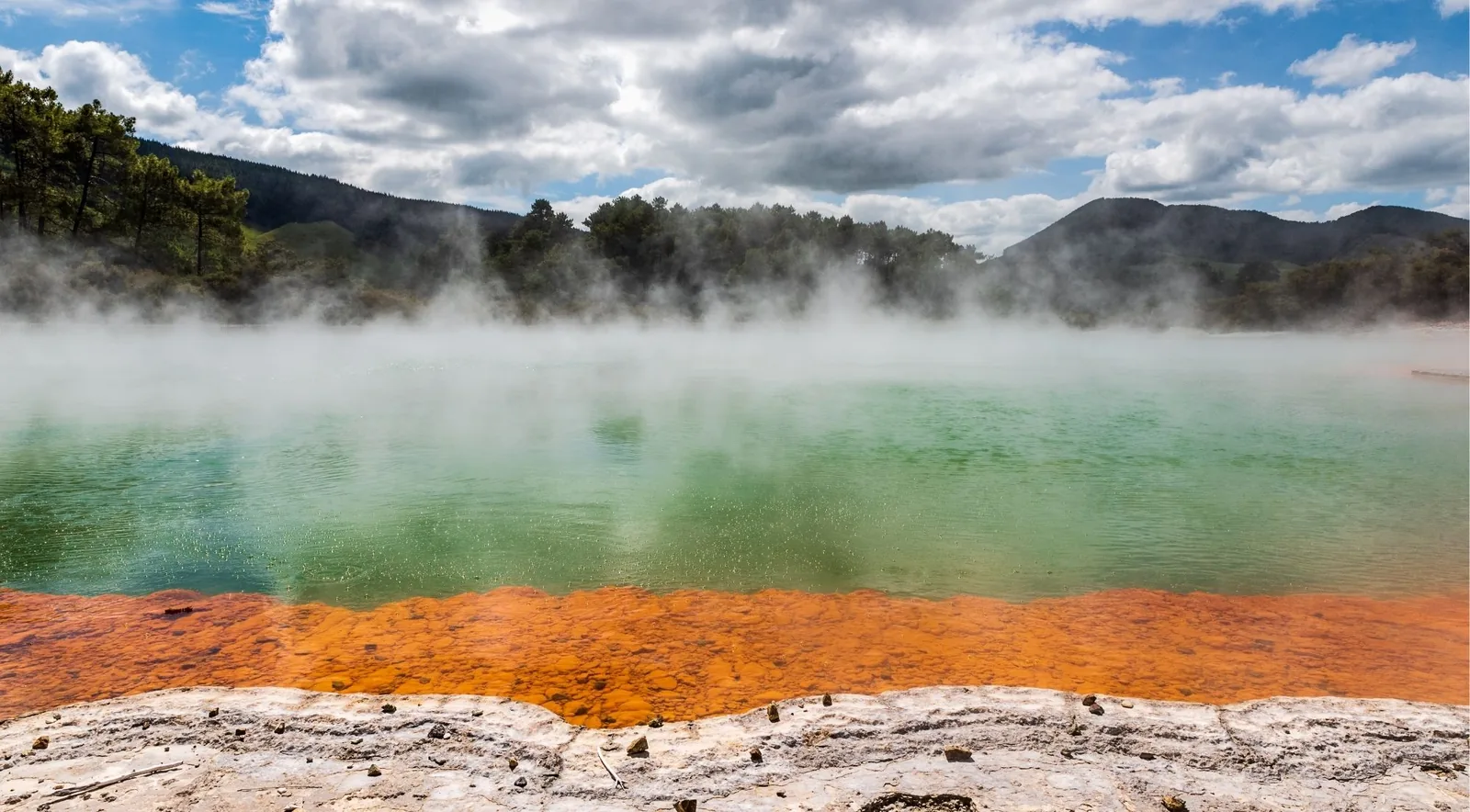
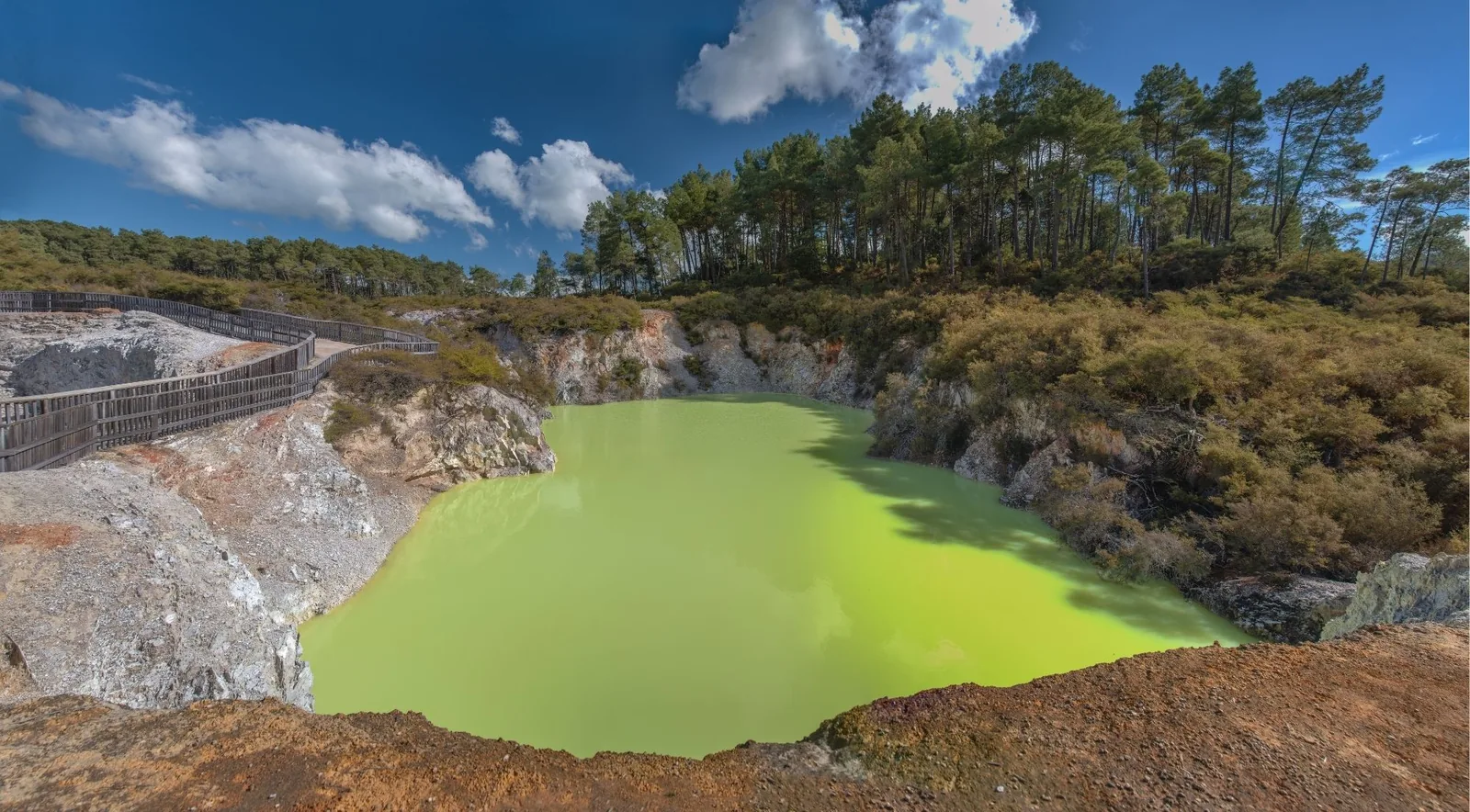
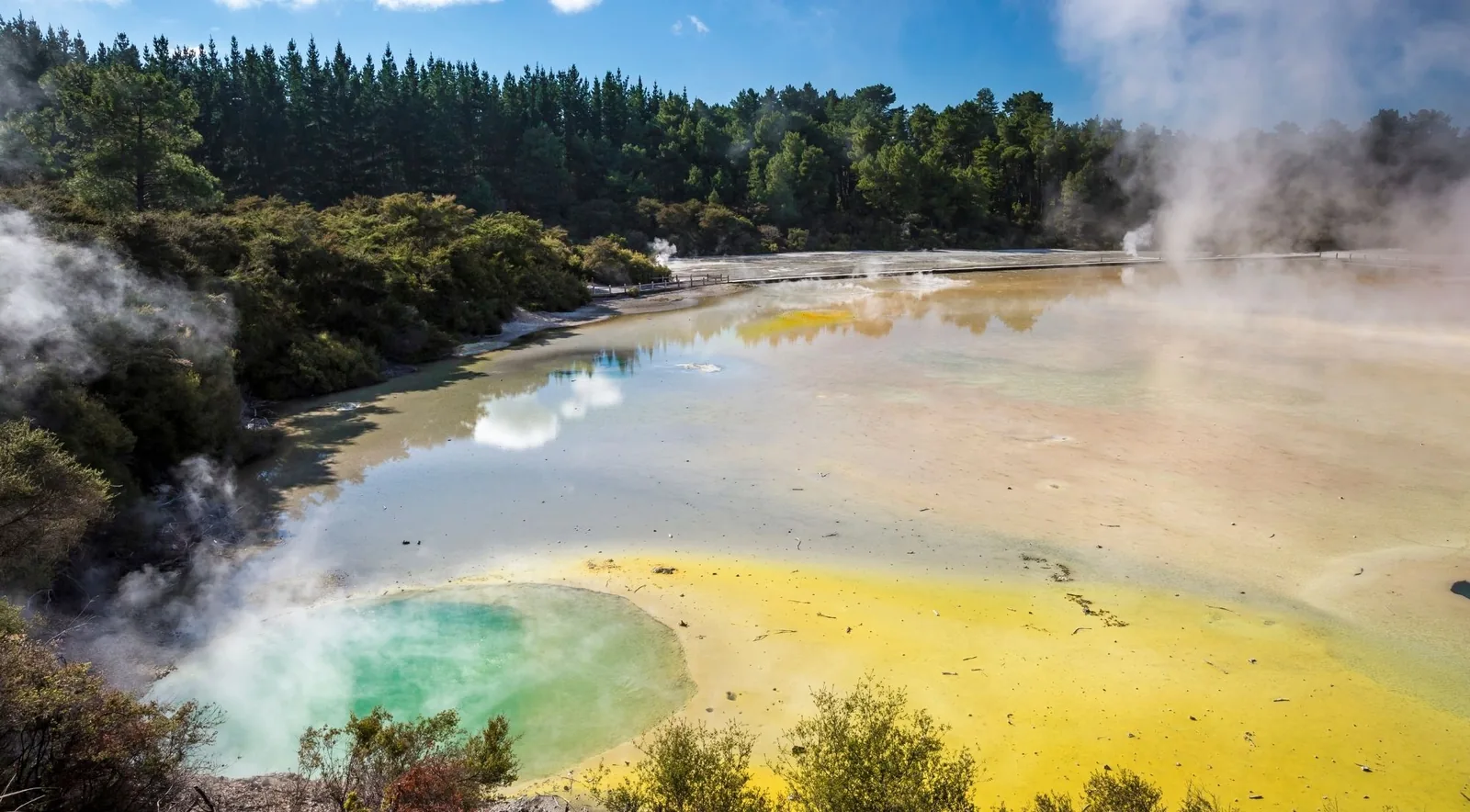
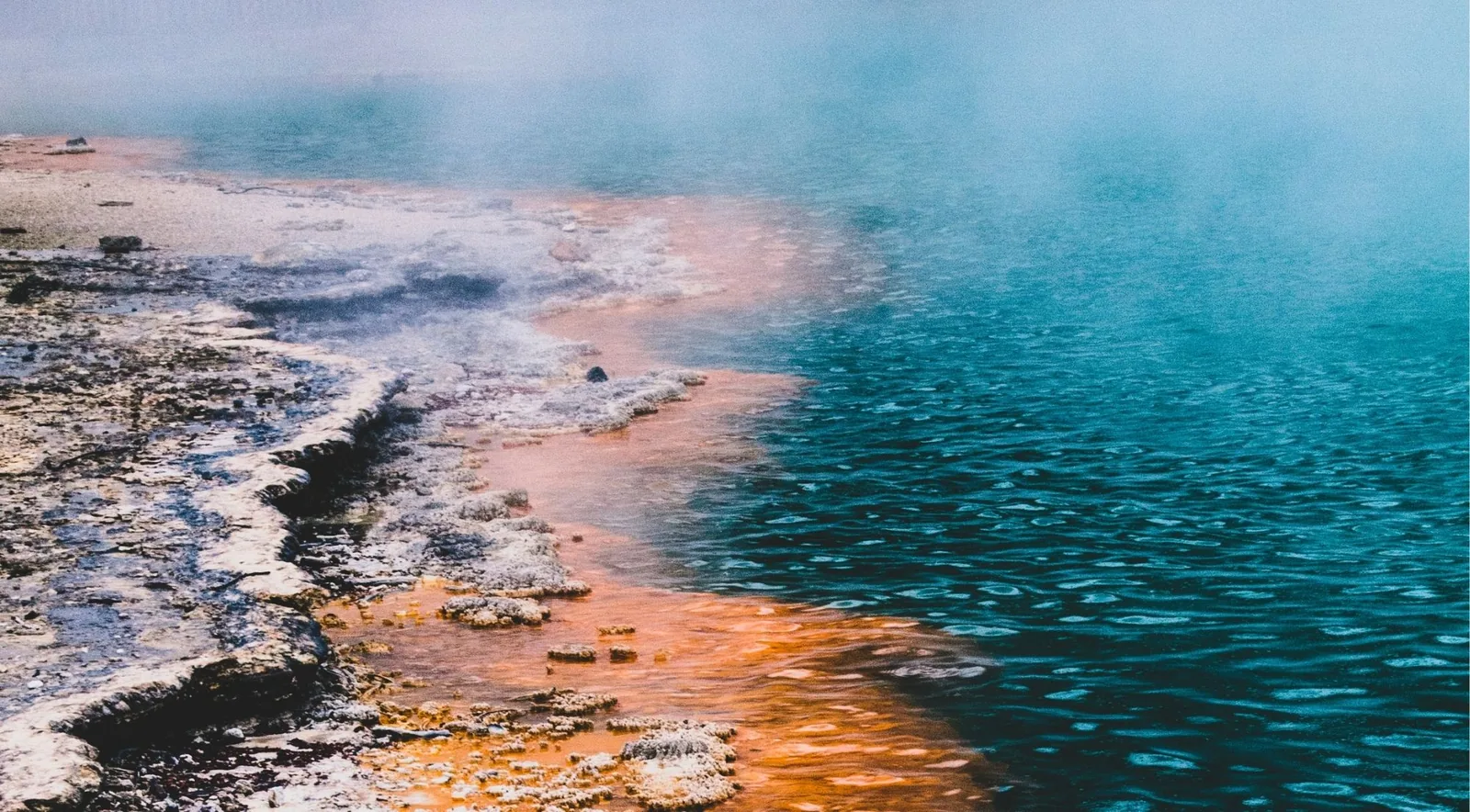
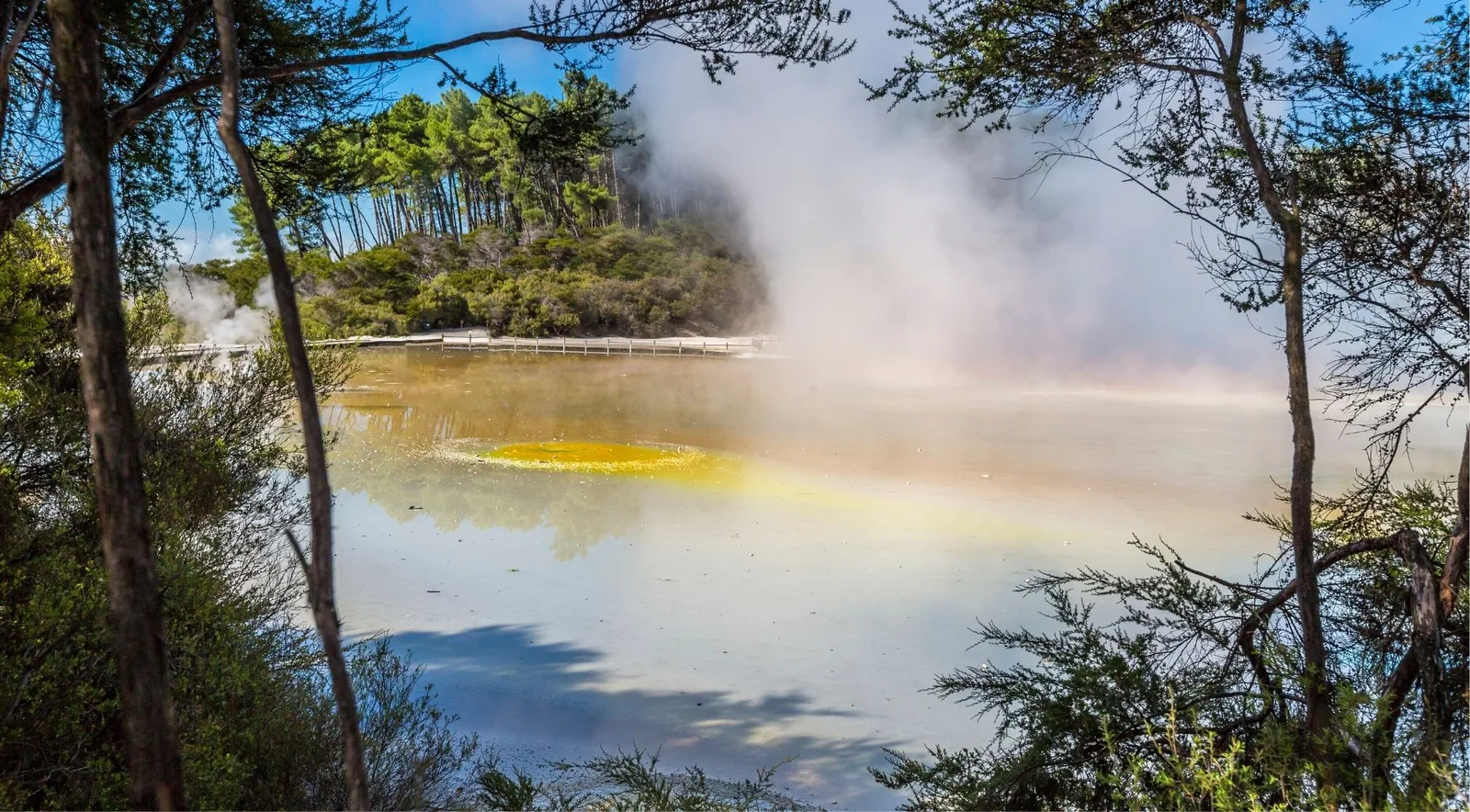
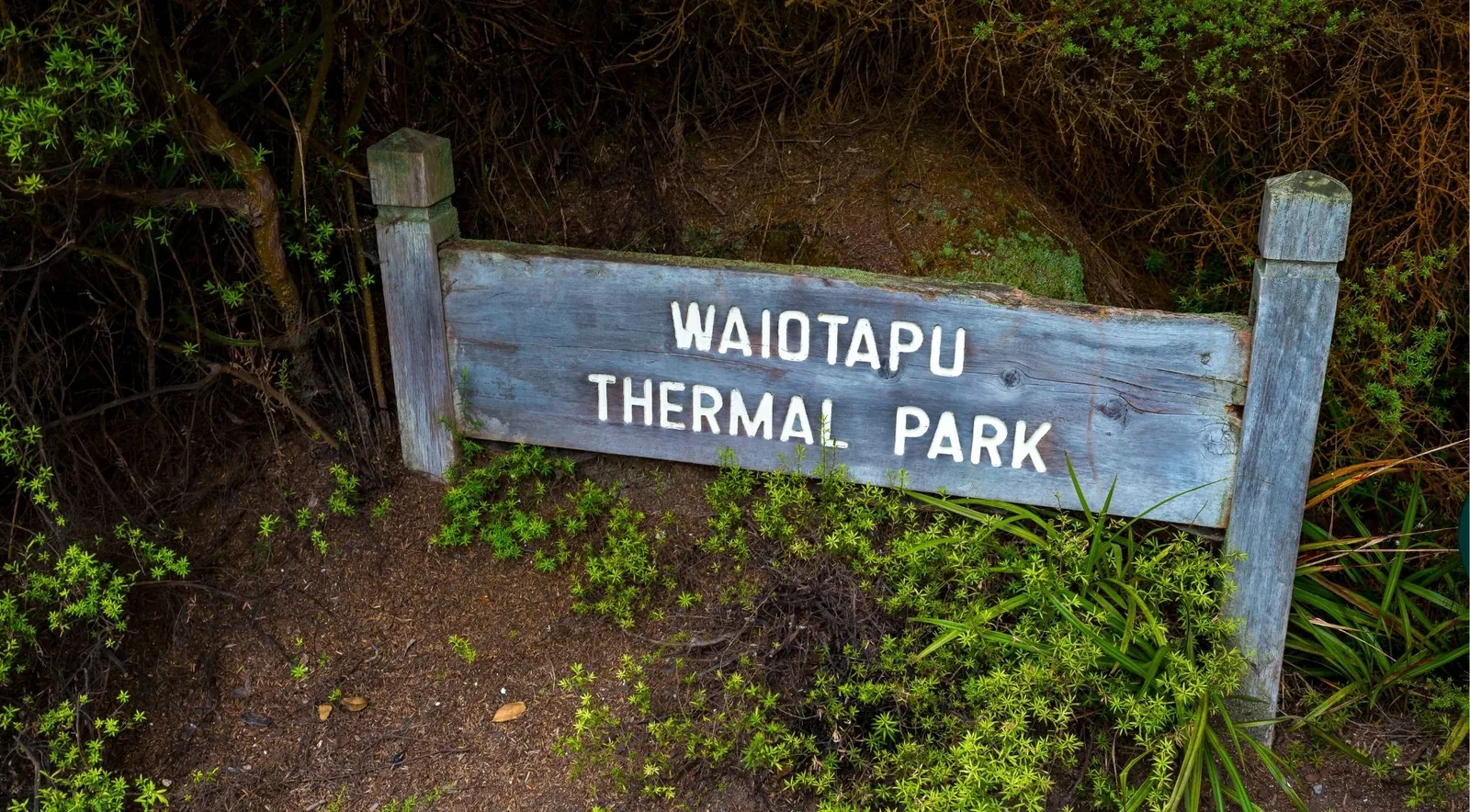
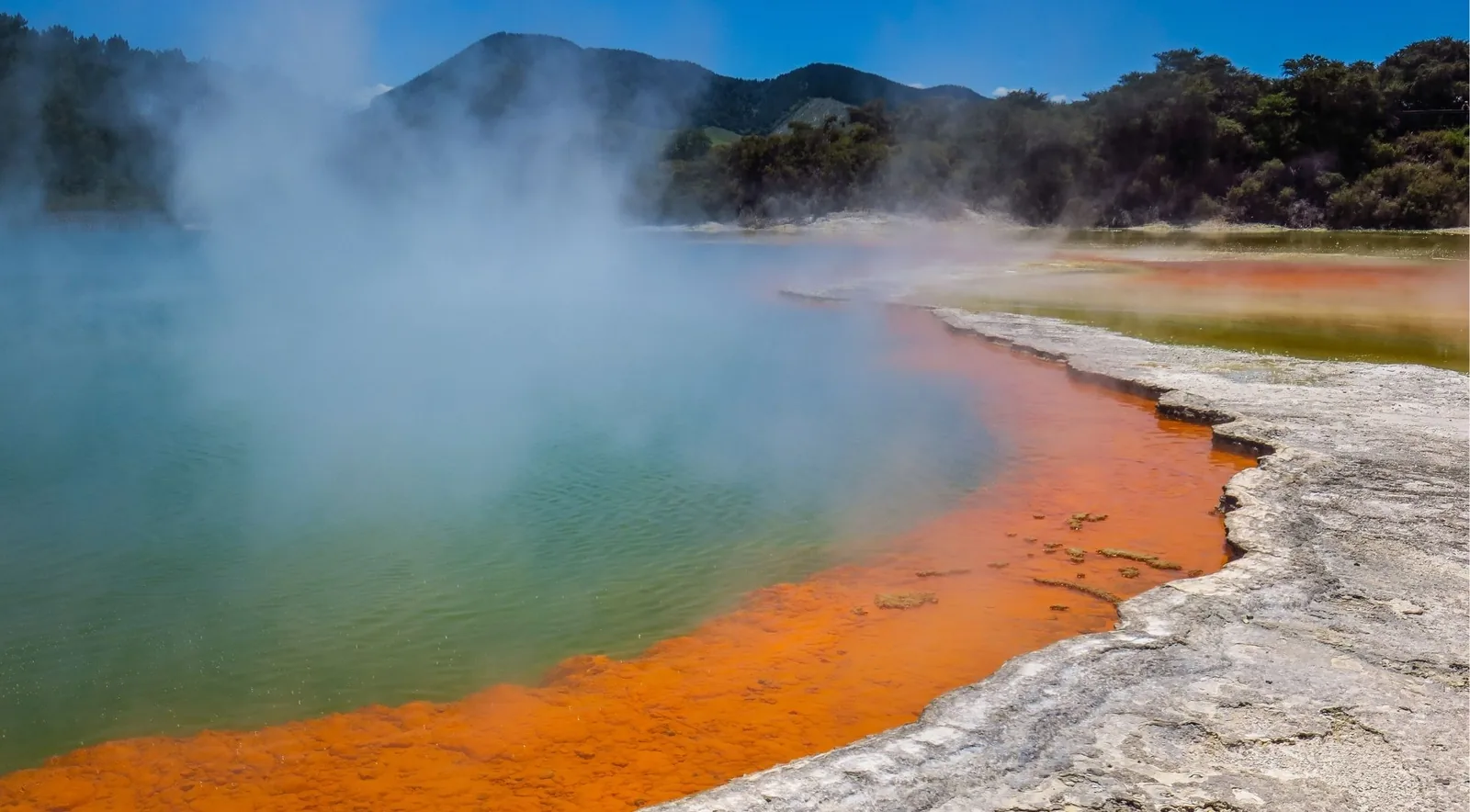
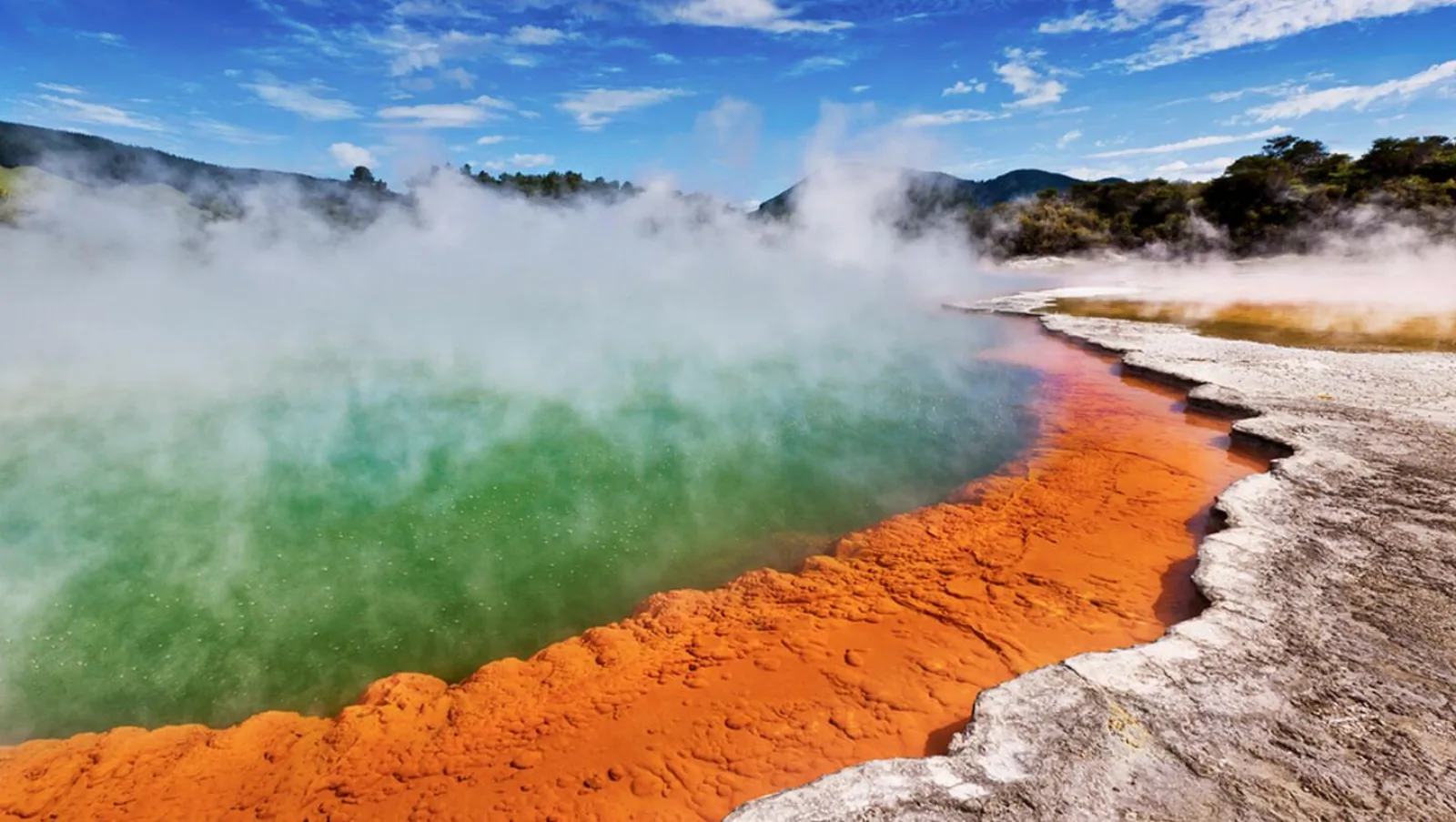
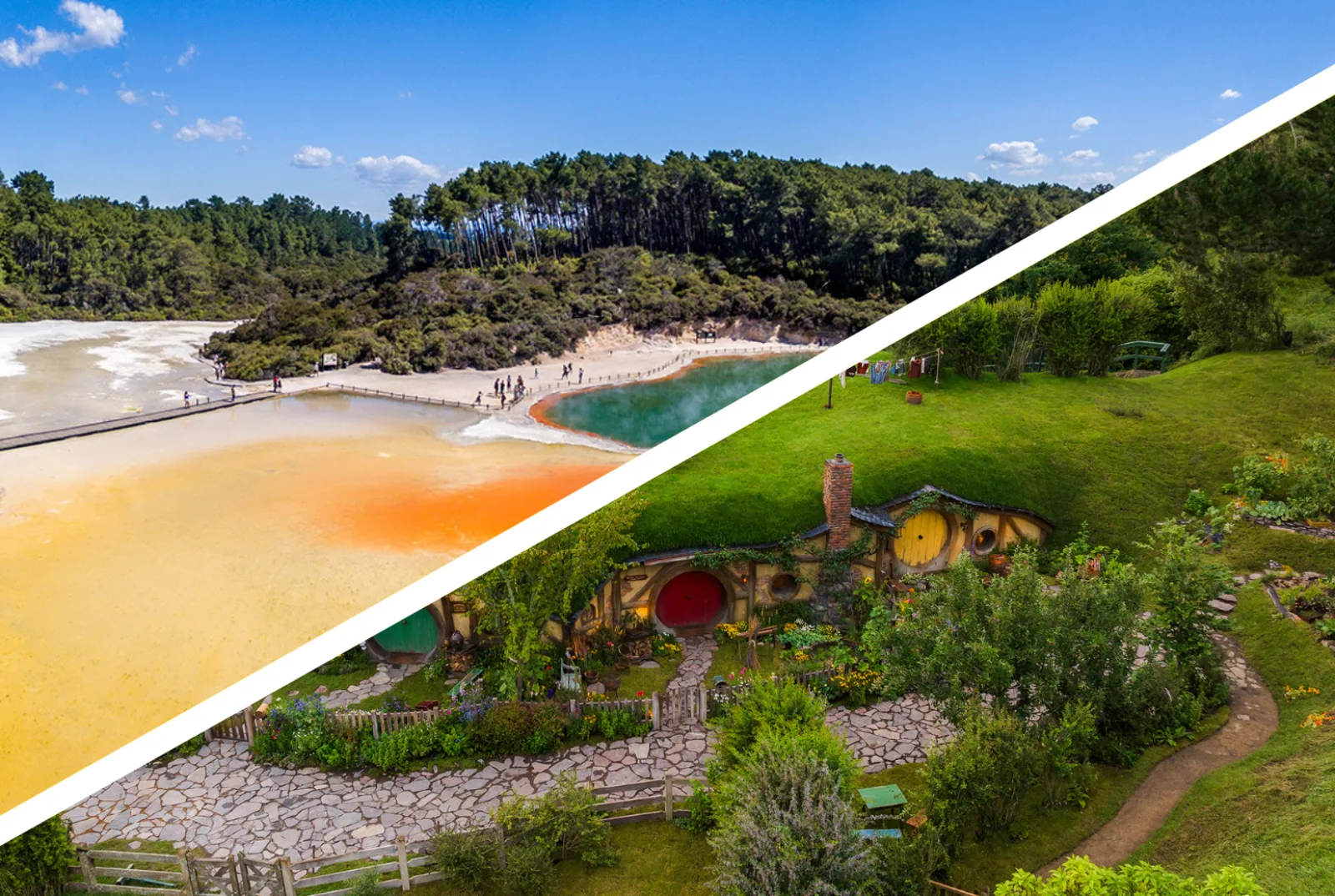
Almost every photograph that sells New Zealand’s geothermal country was taken inside one 18-square-kilometre stretch of collapsed volcanic ground 31 km south of Rotorua. The orange-rimmed pool with the turquoise centre is the Champagne Pool. The improbable lime-green lake is the Devil’s Bath. The yellow-and-jade flat that looks like spilled paint is the Artist’s Palette. All three sit inside Wai-O-Tapu Thermal Wonderland, and all three are reached on foot from the same car park.
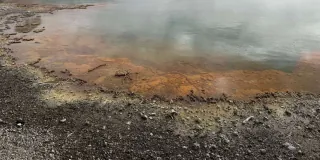
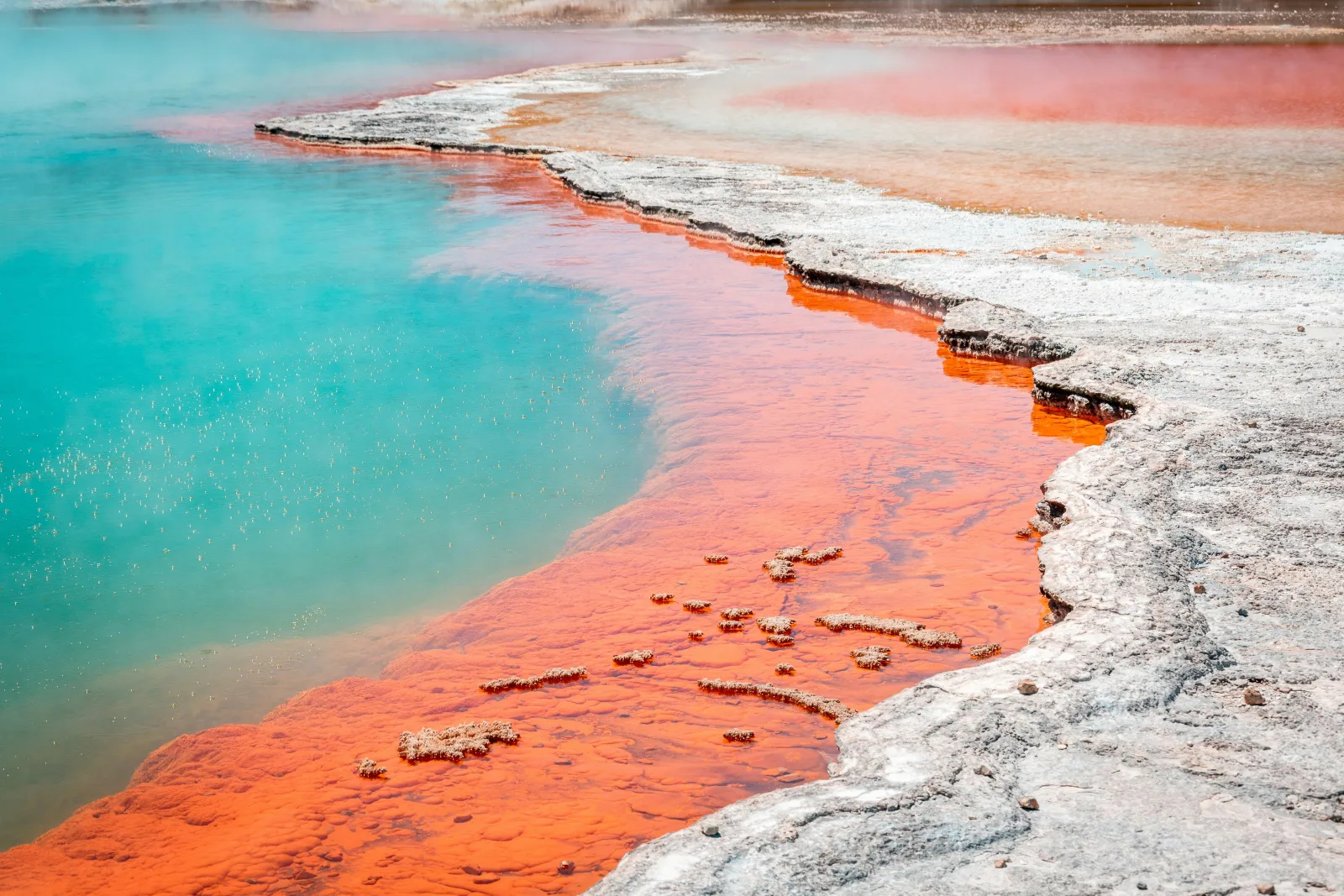
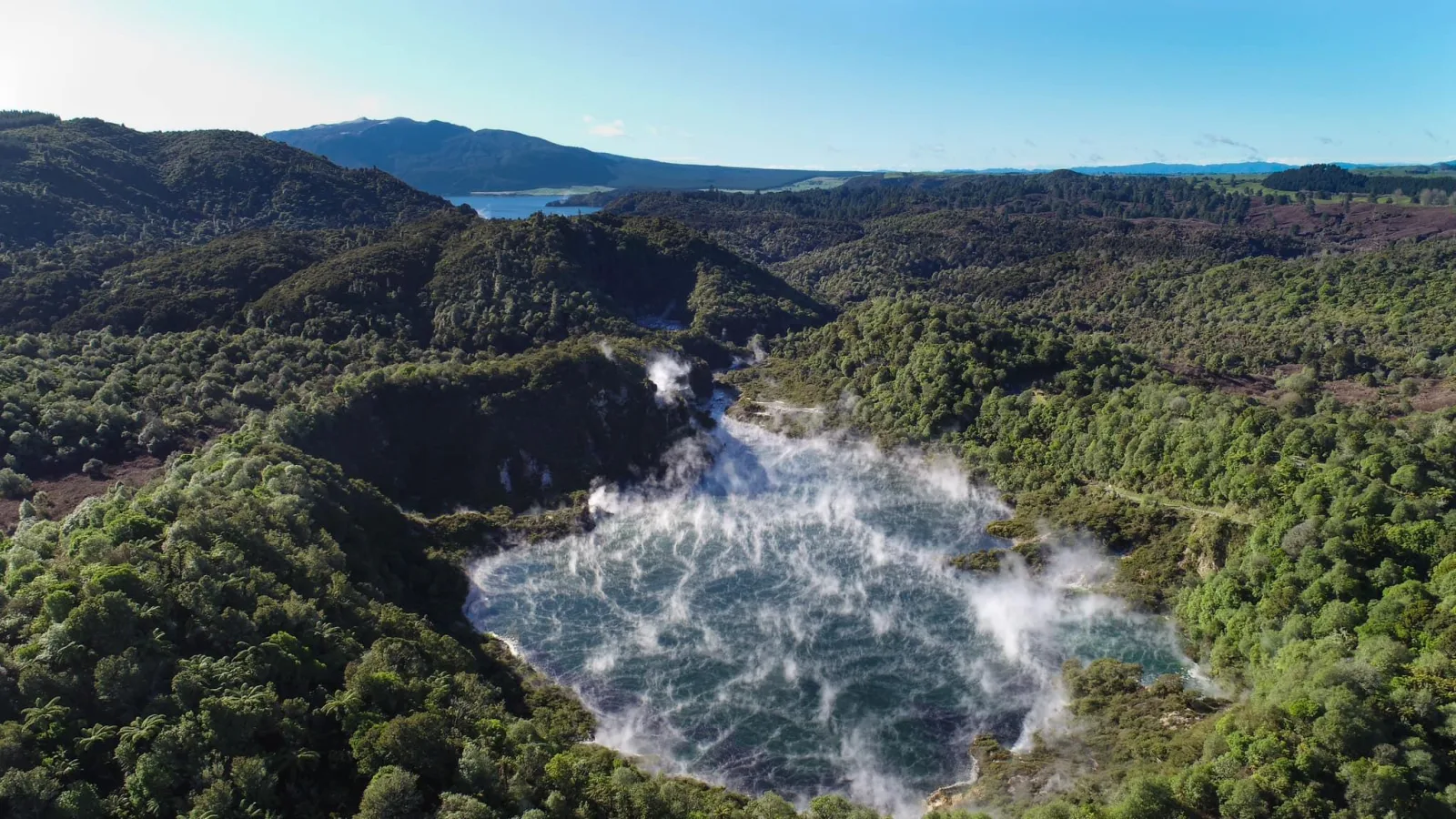
What makes Wai-O-Tapu unusual among Rotorua’s thermal parks is not that it has hot water — the whole district does. It is the mineral chemistry. The Champagne Pool is roughly 65 metres across and 62 metres deep, holds at about 74°C, and precipitates antimony and arsenic sulphides around its rim, which is why the edge is that specific orange. Its overflow drains across the Artist’s Palette and eventually into the Devil’s Bath, where suspended sulphur and ferrous salts produce a green that most people assume has been pushed in editing. It has not been.
What a ticket actually gets you
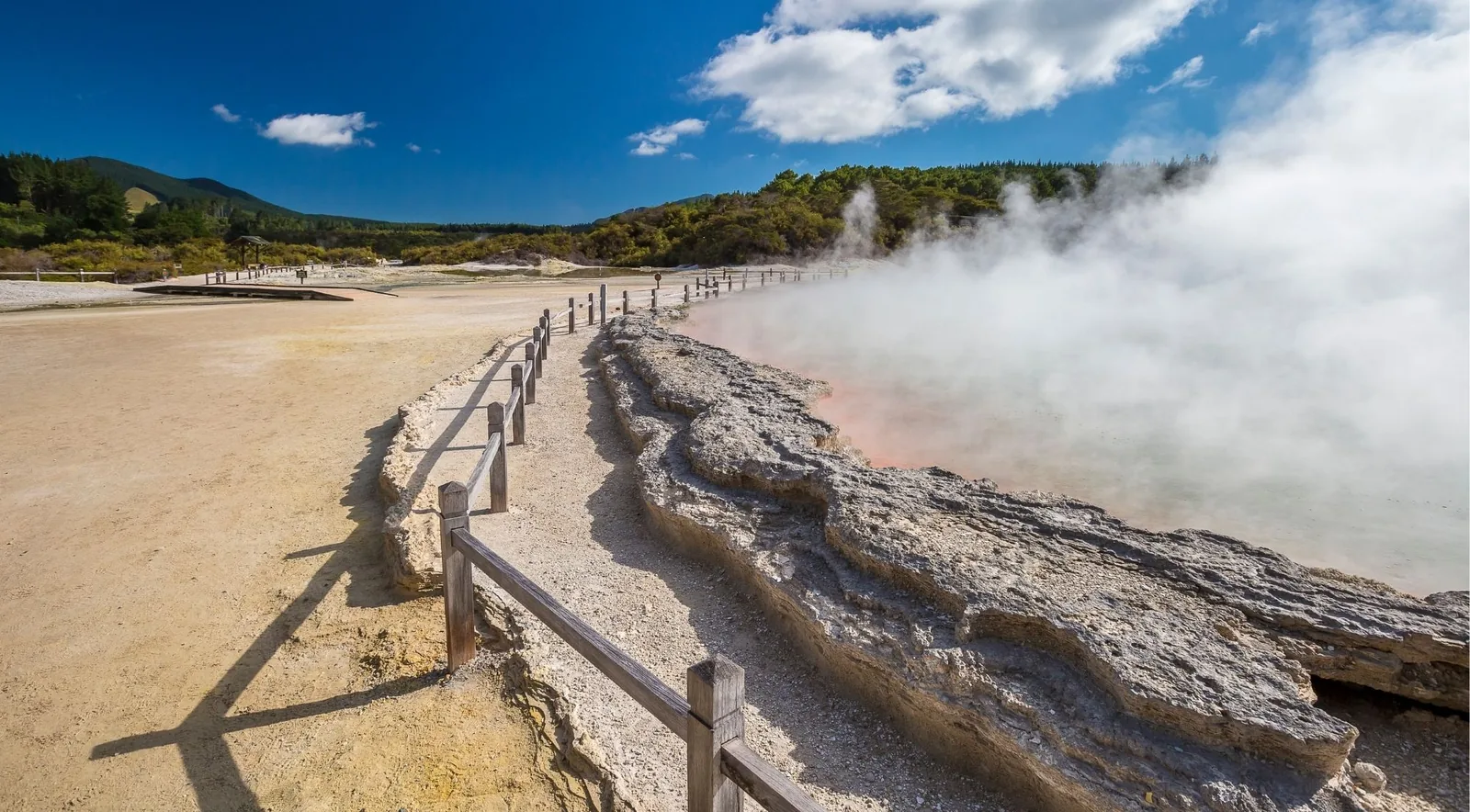
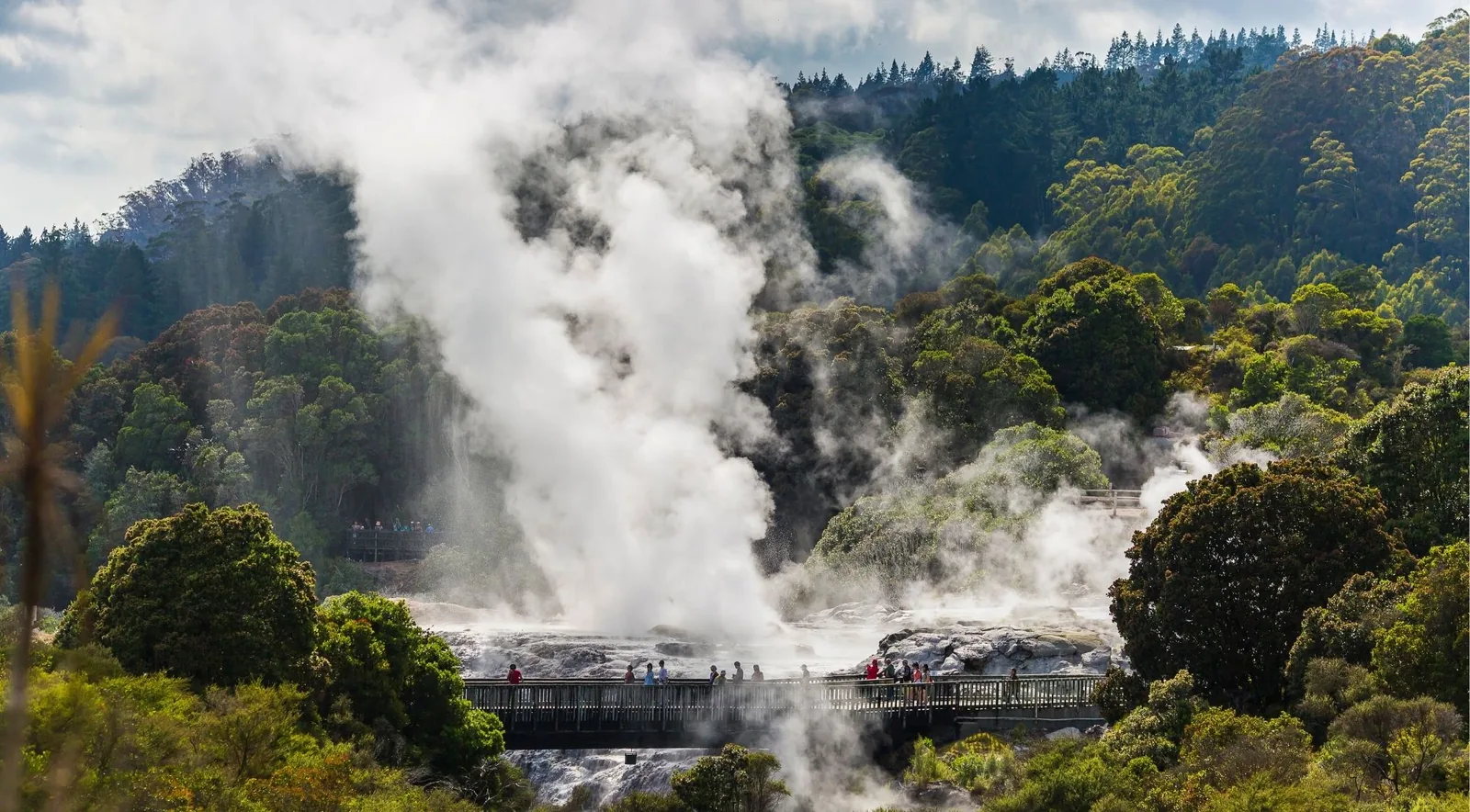
Admission is for the full day and covers three interconnecting walking loops. The short first walk takes about 45 minutes and holds every feature named above; adding the outer walks takes you down past Lake Ngakoro and makes the full circuit roughly 3 km and about 90 minutes, in the park’s own times. The tracks are boardwalk and compacted gravel, well marked, and one of the three is passable with a wheelchair or a stroller — our accessibility guide covers exactly what that means in practice. You walk it yourself — there is no guide inside the park on a standard entry ticket — with a map available in eleven languages; our walking tracks guide maps every junction and all 25 numbered markers. None of the pools is for bathing; our answer to can you swim at Wai-O-Tapu explains why and lists the hot pools nearby where you can soak.
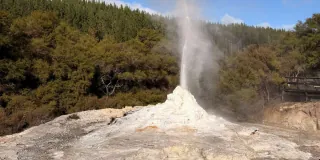
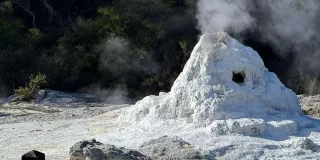
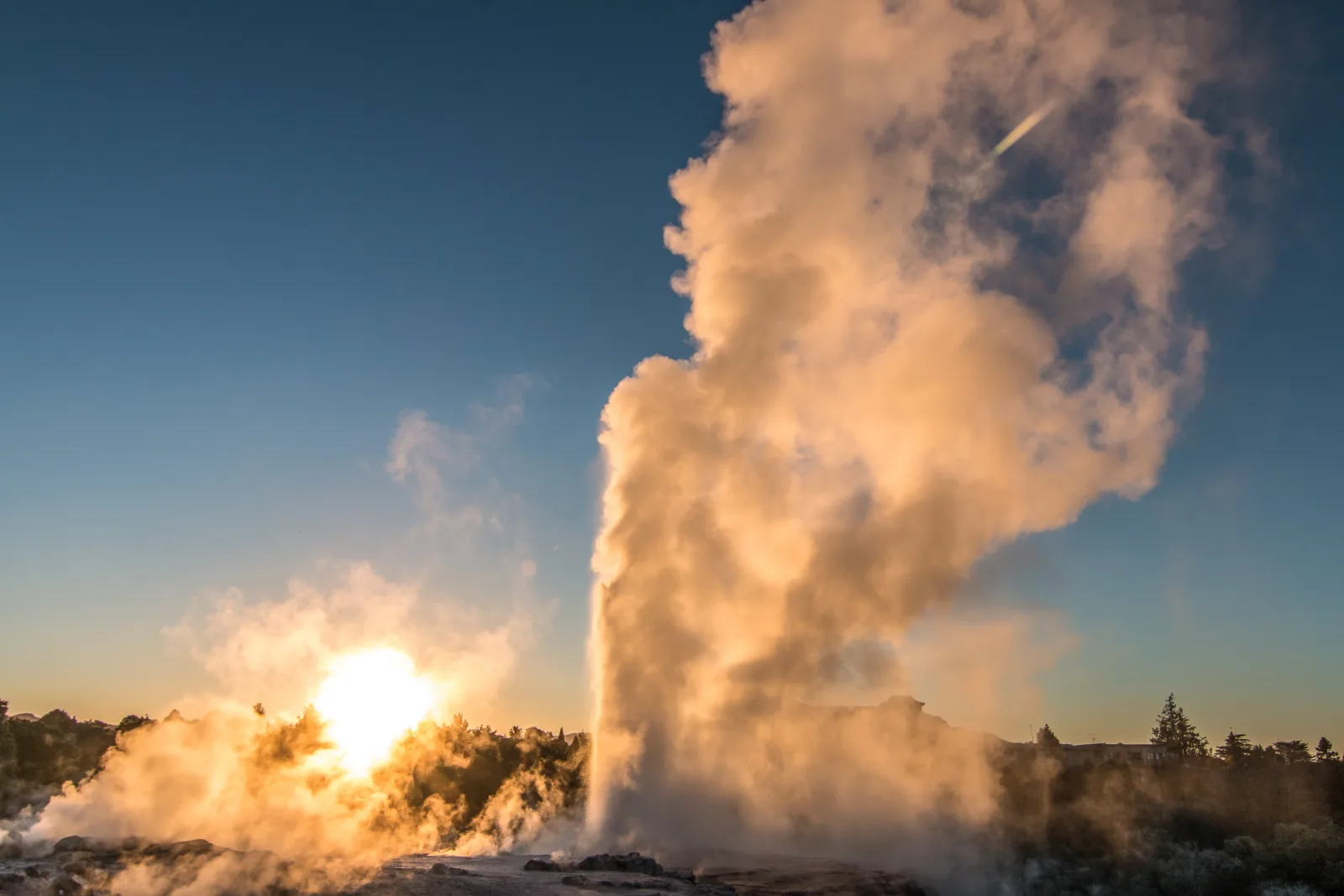
Admission also covers the Lady Knox Geyser, and this is where most first visits go wrong. The geyser is not at the main entrance. It has its own car park a little further along Waiotapu Loop Road, and it runs once a day at 10:15am, triggered by a ranger dropping a surfactant into the vent rather than erupting on a natural cycle. That is why the time is exact and why it does not repeat. Turn up at 10:30 and you have missed the only eruption of the day. Do the geyser first, then drive down to the visitor centre and scan your ticket.
The other timing that catches people is the gate. Wai-O-Tapu is open 8:30am to 4:30pm daily and closes only on Christmas Day, but final admission is 3:00pm. A late-lunch arrival still gets you the park; it does not get you the geyser, and it can leave the longer loops feeling rushed.
Choosing between the ticket and a tour
If you have a car, the Wai-O-Tapu entry ticket is the honest answer. It is the cheapest option on this site by a wide margin, you set your own pace, and the drive down State Highway 5 is straightforward — watch for the Loop Road turn-off, which is easy to overshoot at open-road speed. Our breakdown of the entry ticket →
Adult entry was from $27 on GetYourGuide when we checked in October 2026, about $2 less than the NZ$52 (about $29) the park charges on its own booking page. Families of four do better with the park’s family pass, at NZ$126 (about $71). Our Wai-O-Tapu ticket prices guide sets out what entry and every kind of tour cost.
If you are driving, a night in Rotorua makes the 10:15am geyser easy. Our where to stay in Rotorua for Wai-O-Tapu guide compares the areas by drive time to the park.
Without a car, the calculation changes. Guided trips leaving from central Rotorua fold return transport and park entry into one price and get you back to town by early afternoon — the half-day tour (details) is the shortest of them, and our guide to the best Wai-O-Tapu tours from Rotorua compares them on pickup, length and who guides the walk. The longer ones add Waimangu Volcanic Valley, Te Puia, or both, with admission to each included: the eco-thermal morning tour (details) covers two parks, the full-day tour (details) covers three — our Wai-O-Tapu vs Te Puia vs Waimangu comparison is the place to decide whether all three are worth your time or one will do. Trips leaving from Auckland are a genuinely different proposition — nine to thirteen hours door to door with roughly six of those on the road, which buys you Wai-O-Tapu plus Hobbiton (details · is it worth the 13-hour day?) or a second Rotorua attraction of your choosing (details), but rarely the 10:15am geyser. Our which-ticket guide sets all of them side by side with prices, lengths and what each one actually includes. If Auckland is your base, our Rotorua day trip from Auckland guide has the timings that decide whether the 10:15am geyser is reachable at all.
One thing worth being clear about: the tours that include Wai-O-Tapu are buying the same admission you would buy yourself. You are paying for the driving, the commentary, and — on a couple of them — an actual guide walking the loops with you and explaining what is colouring each pool. That last one is rarer than the listings suggest, and it is the main reason to pay more. Wai-O-Tapu is one stop in a busy town, and if you are planning the rest of the trip around it, our Rotorua tours and excursions guide sorts the region’s tours by what it genuinely does best.
When to go
Wai-O-Tapu is open year-round and the features do not have a season — the pools are as vivid in July as in January. What changes is everything around them. The southern summer, December through February (Wai-O-Tapu in December covers the start of it, Wai-O-Tapu in January the holiday peak and Wai-O-Tapu in February the quieter end), brings the longest days, the warmest walking (what to wear in summer) and the largest crowds, particularly in the hour either side of the geyser; our guide to the best time of day in summer shows how to dodge them, and our Rotorua summer day trips guide shows what else to pair with the park. Winter mornings are cold enough that the steam is dramatically thicker, which is either the best or the worst thing depending on whether you came to photograph the pools or to see them clearly. Shoulder months, March to May and September to November, tend to give the best balance; see Wai-O-Tapu in November for the late-spring end of that window.
Rain is the real variable. The tracks stay open in almost any weather and the sinter surfaces get slippery rather than impassable, but heavy cloud flattens the colour that is the entire point of the visit. Free cancellation up to 24 hours before means holding a date early costs nothing and leaves you free to move it if the forecast turns.
Before you book
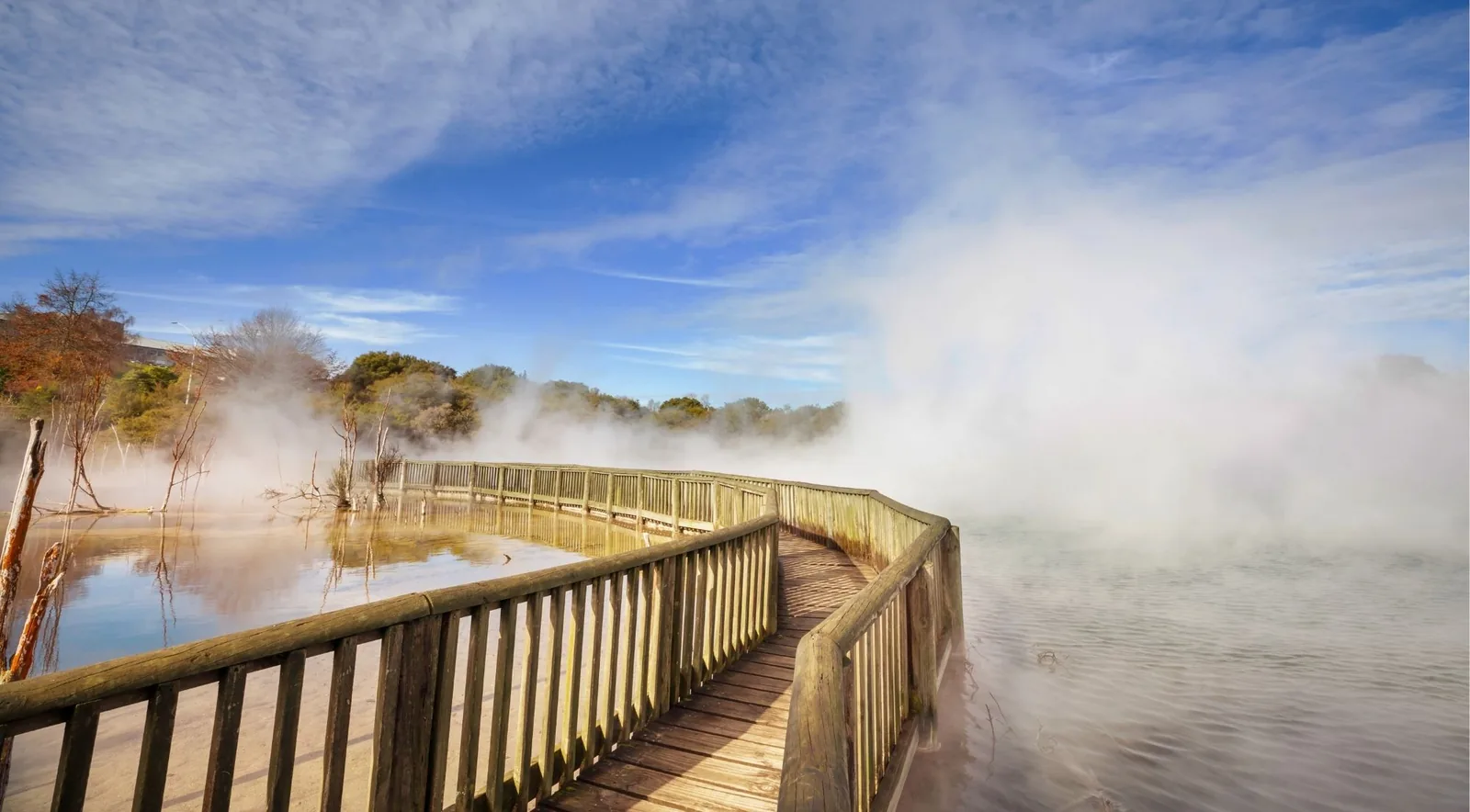
A few practical things the listings tend to bury. The site is cashless — cards and EFTPOS only. Tickets are for a date, not a time slot, and the visitor centre sells them on the day; whether you need to book in advance comes down to the 10:15am geyser, the holiday weeks and your transport. Drones are not permitted anywhere on the property. The sulphur smell is real, comes and goes with the wind, and will tarnish silver jewellery, so leave anything precious in the car. Closed shoes matter more than you would expect: the ground is uneven and, in places, genuinely hot. And the marked tracks are marked for a reason — this is an active geothermal field where the crust can be thin and the water is often at boiling point.
Prices and ratings shown across this site are the operators’ own live figures on GetYourGuide and shift a little from day to day. The booking panel always shows the current number.
 from $122/night